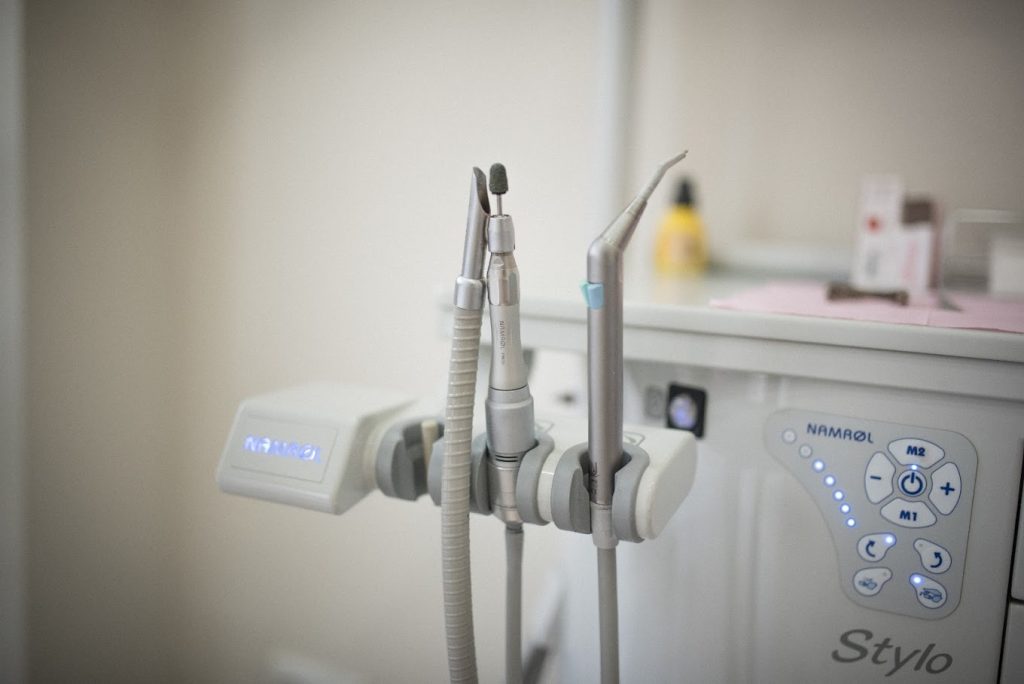
Why focus on the micromotor?
The micromotor is the operational heart of a podiatry unit. It influences milling quality, temperature control, the vibration perceived by the patient and, consequently, the practitioner’s posture and fatigue.
Within the Namrol ecosystem (Activ, Epsylon, Futura Plus and Futura XL), its integration with the control panel—including rpm display, reverse rotation, automatic selection when lifted from its holder and, where applicable, spray control—turns the right technical choice into tangible improvements in clinical performance.
What minimum specifications should you look for?
The minimum specification you should require is a functional range of 60 to 40,000 rpm, with stable torque at low speeds. This stability prevents jerking when working below 10,000 rpm and maintains consistent performance during delicate reduction procedures.
The 1:1 handpiece for Ø2.35 mm burs should provide reliable concentricity and minimal vibration. Effective dust sealing and well-protected bearings extend its service life and reduce the characteristic “grinding” noise associated with wear.
Spray or no spray?
- Yes, if your practice handles a significant volume of orthopodiatry work or frequently treats severely thickened nails. An internal spray system improves temperature control and helps reduce dust at the source.
- Optional, if your treatment room has an effective turbine-powered suction system and you mainly perform standard podiatric treatments.
How can it be integrated into my Namrol unit?
Integration with the unit determines the quality of your daily working experience.
With Activ, the direct rpm display and automatic micromotor selection when it is lifted from its holder streamline instrument changes.
For mixed schedules involving intensive milling, Futura Plus adds water programmes and instrument memories, helping to standardise positions and operating parameters between patients.
With Futura XL, the option to configure a second micromotor allows you to switch quickly between different setups—with or without spray, or with different handpieces—without increasing turnaround times.
Epsylon and Epsylon Plus are designed for busy practices, offering a compact and robust configuration that reduces operator movement and keeps the focus on the treatment area.
What difference will the right micromotor make in clinical practice?
- Uniform milling, without jerking when operating below 5,000–10,000 rpm.
- Controlled temperature with spray, reducing discomfort and shortening treatment times.
- Less fatigue, thanks to lower vibration and better hose balance.
- Faster transitions, with instrument memories and rpm display reducing manual adjustments and increasing productive treatment time.
Essential preventive maintenance for the micromotor and handpiece
Preventive maintenance of the micromotor and handpiece assembly is simple but essential.
At the beginning of each working day, check that the rpm reading remains stable and that reverse rotation responds without delay. If you use spray, briefly flush the system until the flow runs clean to prevent air pockets and backflow.
After cleaning, lubricating the handpiece before sterilisation with the correct propellant and nozzle helps protect the bearings and gears while preserving concentricity over time.
A weekly inspection of seals and filters, together with close attention to warning signs—such as increased body temperature, a drop in rpm under load or an unusual grinding noise—allows the instrument to be withdrawn from use before more serious damage occurs.
How can I measure whether the investment is delivering results?
Evaluate the investment by measuring what truly matters. A sustained reduction in procedure times after four weeks, stable rpm under load without visible fluctuations on the control panel, fewer complaints about heat or vibration, and a rework rate below one in every thousand procedures are all signs that the micromotor is suited to your practice.
If your unit includes instrument memories, also check whether the stored positions and parameters reduce manual adjustments and downtime between patients.
The micromotor: a key component
If you can optimise only one component of your Namrol treatment unit, choose the micromotor: a practical rpm range, stable torque, low vibration and, where appropriate, an integrated spray system.
The entire system performs better when this key component is correctly specified and properly maintained.