What should you consider before investing in a grinder?
In orthopodiatry, a grinder is not just another piece of workshop equipment. It directly affects finishing quality, workplace cleanliness, practitioner comfort and daily efficiency when manufacturing and adjusting custom-made orthoses.
Choosing the right model therefore involves more than comparing prices or reviewing technical specifications in isolation. You need to understand your workload, the materials you handle and the level of suction, ergonomics and performance required in your daily practice.
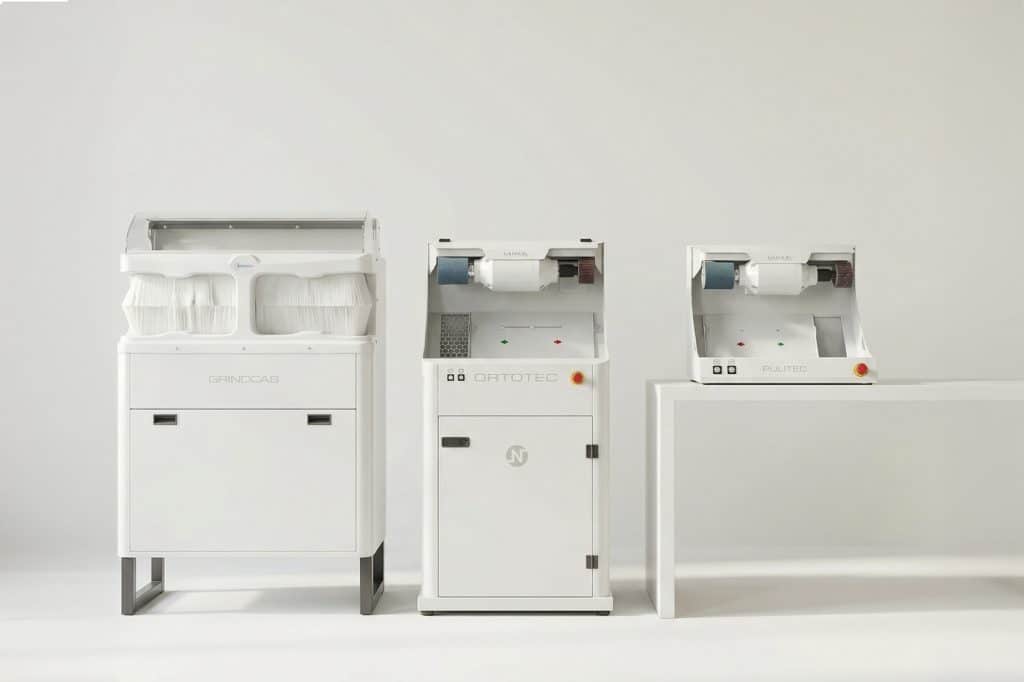
Namrol offers grinders in different formats, ranging from compact benchtop solutions to floor-standing units and grinding cabinets, specifically designed to meet very different working requirements.
Why investing in a quality grinder is worthwhile
A professional grinder provides much more than grinding and finishing capacity. It delivers consistent results, greater control over materials and a safer working environment.
During grinding operations, one of the main risks is the inhalation of fine airborne dust. High-performance turbine suction systems help remove this contamination from the working environment. Motor power, dust bag capacity and operating noise are also key factors when making an informed purchase.
In practical terms, a quality grinder not only performs better but also maintains its performance over time. When the motor responds effortlessly, the finish is more consistent and working with EVA, resins or thermoplastics becomes smoother.
An effective suction system keeps the surrounding area cleaner and improves the overall user experience. When the equipment also provides easy access to the dust bag and grinding area, maintenance no longer becomes an inconvenient task.
What types of podiatry grinders are available?
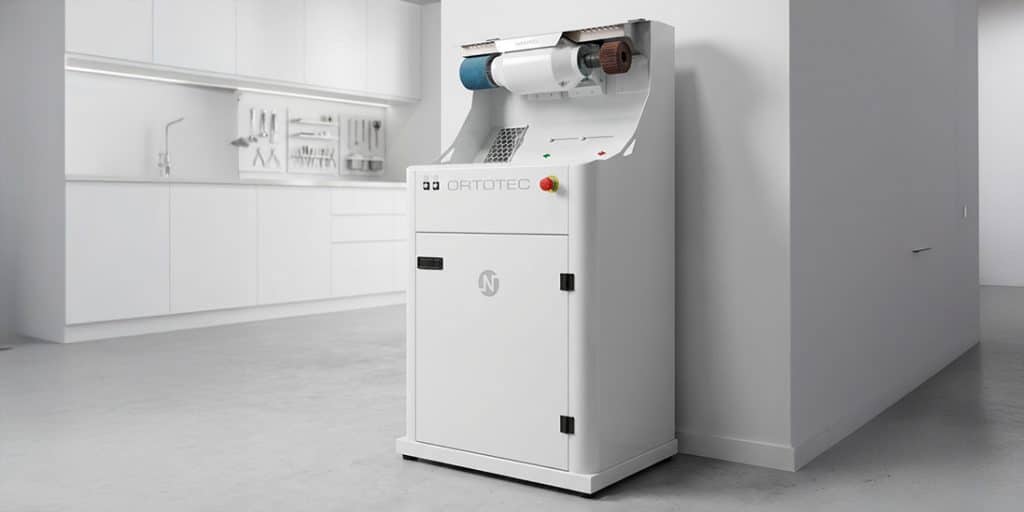
Floor-standing grinders with suction
These are the most suitable option for high workloads or when a stable workstation is required for the continuous grinding of orthoses. Floor-standing grinders are designed to handle harder materials while allowing the operator to work at a suitable height.
The Ortotec offers a spacious working area, high suction airflow, LED lighting and a sliding-shutter system that allows the suction inlet to be positioned closer to the area being worked on. It also features an antistatic system that reduces the electrostatic charge generated by dry dust.
Benchtop grinders with suction
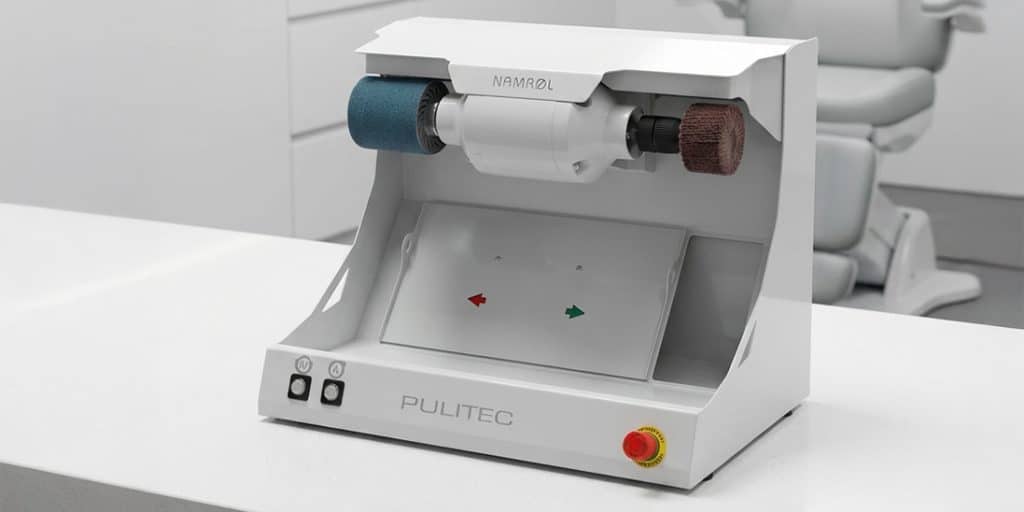
When workshop space is limited, or when a compact solution with effective suction is required, a benchtop grinder can be a highly practical alternative.
The Pulilab, for example, is a compact and versatile grinder equipped with a 575 W motor, a professional high-airflow turbine suction system and a high-capacity dust bag. It is designed for professionals who need reliable performance from a compact unit.
Grinding cabinets
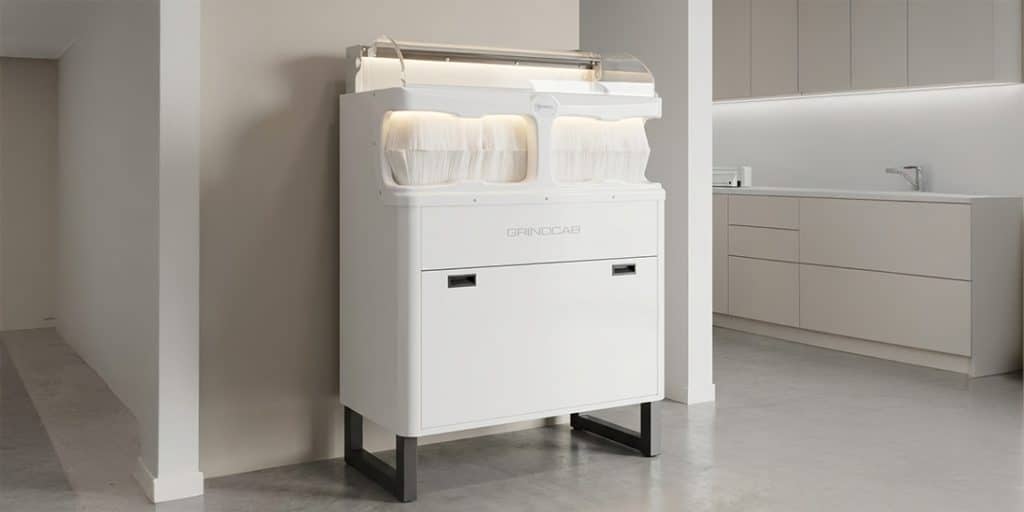
Grinding cabinets follow a different working principle. Rather than relying on conventional suction, they are designed to contain dust more effectively within the grinding area.
Models such as Pulicab and Grindcab operate without a traditional suction system but provide a more controlled environment. They feature curved glass protection, a front brush system that allows the hands to move freely and convenient access to the dust collection area.
The Pulicab also has a stated noise level below 64 dB, an important reference for professionals who prioritise acoustic comfort.
What technical criteria should you review before buying?
The first is suction. It is not enough to know whether the machine provides suction; you also need to understand how effectively it works.
In professional grinding, the real difference lies in the airflow, the proximity of the extraction point to the working area and the system’s ability to maintain its performance as the dust bag fills. Dust bag capacity is often overlooked, despite directly affecting how long optimal suction levels can be maintained.
The second consideration is usable power. Namrol models use 3/4 hp and 1 hp motors, both of which can meet the requirements of a podiatry workshop. However, a more powerful motor provides greater reserve capacity, a longer service life and a better response when working with materials of different thicknesses and hardness levels.
In practical terms, do not buy based solely on the nominal power rating. Consider the performance reserve you may need in six months or three years.
The third factor is ergonomics. The size of the working area, hand position, visibility of the grinding surface and ease of access directly affect practitioner fatigue and finishing accuracy.
Ortotec stands out for its spacious working area and LED lighting directed towards the work surface. Pulicab and Grindcab provide panoramic visibility and a front brush system, while Pulilab combines a compact format with an integrated suction workstation.
These differences may appear minor on paper, but they are highly noticeable in daily use.
The fourth factor is noise. It is important to look beyond a single decibel rating. Both sound volume and frequency influence acoustic comfort.
A grinder may provide sufficient power, but if its acoustic performance is poorly controlled, it can become uncomfortable to use. This is particularly important in clinics where the workshop is located close to treatment areas or where the equipment operates for extended periods.
Maintenance: a key part of the purchasing decision
A well-chosen grinder should also be easy to maintain. Front access to the dust bag or collection tray, straightforward cleaning of the grinding area and the availability of spare parts should all be reviewed before making a purchase.
Namrol grinders are designed to provide convenient access to the dust bag. Original filter bags and spare parts for Namrol grinders are also available from Podoservice. These bags are made from high-quality fabric and feature reinforced seams to maximise filtration and durability.
The operational recommendation is straightforward: clean the working area regularly, monitor the dust bag’s saturation level, inspect the wear of sanding belts and abrasive components, and do not ignore a loss of suction or an unusual increase in noise.
Performance problems often develop gradually rather than appearing suddenly. A basic preventive maintenance routine therefore extends the equipment’s service life and preserves finishing quality.
Is equipment durability also part of sustainability?
Yes, and it is one of the most important factors. Equipment that remains operational for many years generates less waste and reduces the need to manufacture, transport and replace machinery.
Namrol focuses on:
- Repairable equipment.
- Availability of spare parts.
- Specialist after-sales support.
This allows podiatrists to keep their equipment operational for longer, reducing its environmental impact and achieving a better return on their investment.
Choosing well means working better
The best podiatry grinder is neither the largest nor the cheapest. It is the one that matches the way you work.
If you need a compact solution, a benchtop grinder may be the most practical choice. If you manufacture orthoses regularly and need maximum suction capacity and improved ergonomics, a floor-standing grinder will be more suitable. If your priority is containing the working area, a grinding cabinet can provide a different and more controlled experience.
The important thing is to make the decision based on technical criteria rather than urgency. That is the difference between buying a machine and making an investment.
At Namrol, we have been developing grinders for podiatry and orthopodiatry for more than 30 years. This experience is reflected in equipment designed to provide greater control, comfort and reliability.
If you are considering adding a grinder to your clinic or upgrading your workshop, begin by analysing your actual workflow, the available space and the materials you use each week. From there, choosing the right equipment becomes much clearer.